

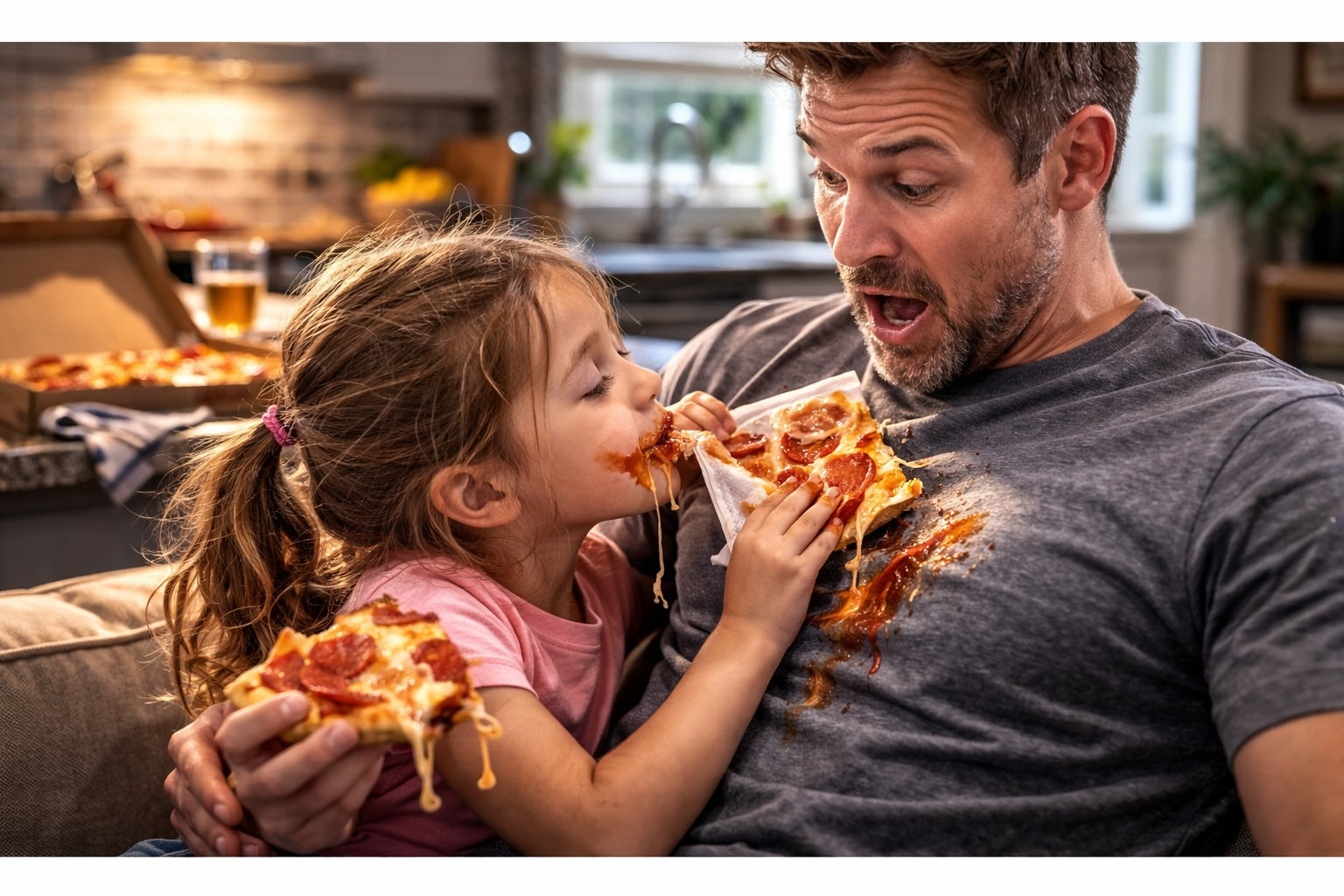
I want to tell you about a Saturday afternoon that still haunts me a little.
My seven year old daughter decided to use my shoulder as a napkin after eating an entire slice of pepperoni pizza. I was wearing a slate grey linen shirt I'd had for three years. It was a good shirt. A shirt I liked. And in the space of about four seconds, it had a perfect greasy handprint on it like some kind of crime scene evidence.
I didn't treat it right away. That was my first mistake.
I thought running it under hot water would help. That was my second.
By the time I knew what I was actually doing, the oil had bonded to the fibers and the shirt was basically a lost cause. And I stood there in the laundry room, slightly defeated, knowing this had happened to me at least four other times before. That's kind of how this whole thing started.
Grease and oil stains are not like other stains. They don't respond to the same instincts. When your kid spills grape juice, you see it, you blot it, you treat it, you move on. Grease is sneaky. You might not even notice it until you pull the shirt out of the dryer and see a dark shadow that is now permanently set into the fabric. Dryer heat is the enemy here. Once heat gets involved, you've lost the negotiation.
The first rule, and I'll say it plainly is to not apply heat until the stain is fully gone. No dryer. No hot water rinse. If you're ironing and you notice a grease mark, stop. Put the iron down. The heat is locking the stain in, not helping it out.
Here's what most people don't understand about why certain stain removers work and others don't: it's biology, not just chemistry. Enzymes are proteins that break down specific molecules, they essentially digest the stain at a molecular level rather than just trying to rinse it away. This is why an enzyme-based treatment will outperform a standard detergent on grease almost every time, especially on fabric where the oil has started to set.
For cooking oil, bacon grease, pizza stains, that buttery fingerprint on a sleeve the enzyme doing the heavy lifting is lipase. Lipase is specifically designed to break down fats and oils into smaller molecules that water can actually carry away. Without it, you're mostly just moving grease around. With it, you're dismantling it.
But here's where it gets more interesting. Grease stains are rarely just grease. That pizza handprint on my shirt wasn't pure olive oil. It was oil mixed with starch from the crust, proteins from the cheese, sugars, plant-based residue from the sauce. A single-enzyme product hits one part of that stain and leaves the rest. That's why a full-spectrum enzyme formula matters more than most people realize.
Amylase goes after the starch, the carbohydrate layer that often travels with greasy food stains. Protease breaks down the protein component, which matters more than you'd think on anything involving meat, dairy, or a kid who has somehow gotten egg on your collar. Cellulase works on the cotton fibers themselves, gently lifting embedded particles that have gotten trapped in the weave rather than sitting on the surface. Pectinase targets the plant-based residue the fruit, the sauce, the stuff that bonds with the oil and makes the stain more complex than it looks. Mannanase handles gum-based compounds that show up in a lot of food products and cosmetics, which is part of why sunscreen stains are so stubborn. And NucleACE works at the cellular level on biological material that other enzymes don't catch.
Seven enzymes. Each targeting a different molecular structure. Because a grease stain in the real world on a real shirt, in a real house with real kids is never just one thing.
My second kid's contribution to my understanding of all this was a car ride in which he managed to get sunscreen on her carseat, my jeans, the door panel, and somehow his own hair, all within about six minutes of us leaving the driveway. Sunscreen is a special category of nightmare. It's oil-based, it's designed to resist water, and it contains compounds that bond to fabric and laugh at standard detergent. Mannanase and Lipase working together is the answer there. Single-enzyme treatments mostly just frustrate you.
We were honestly wrong for a long time about how much the enzyme profile matters versus just the concentration of the formula. Turns out the profile is everything. A higher concentration of the wrong enzyme is still the wrong enzyme.
The mechanical side of this still matters, though. Before you apply anything, blot the excess grease, don't rub, blot. Rubbing pushes it deeper into the fiber.
Apply the treatment, work it in gently, and let it sit. This part is important and it's the step people skip. Enzymes need dwell time to do their job. Longer on something set. Then wash in the coolest water the fabric allows, check the stain before you put anything in the dryer, and if it's not gone treat it again. Cold water, no heat, repeat.
Speed still matters. An enzyme treatment applied immediately will outperform the same treatment applied an hour later. But the gap is smaller than it is with detergent alone, because enzymes can work on set stains in a way that surfactants mostly can't. There's actual research on this. The dwell-time effectiveness of lipase on set cooking oil stains is meaningfully better than standard detergent even after 24 hours. That number surprised me when I first saw it. It shouldn't have.
The shirt is replaceable. But you should know why it keeps happening and what's actually happening at the fiber level when you treat it right.
Share:
If it’s food or bodily fluids, enzymes are the grown-up solution. Here’s why
Why Enzymes?