

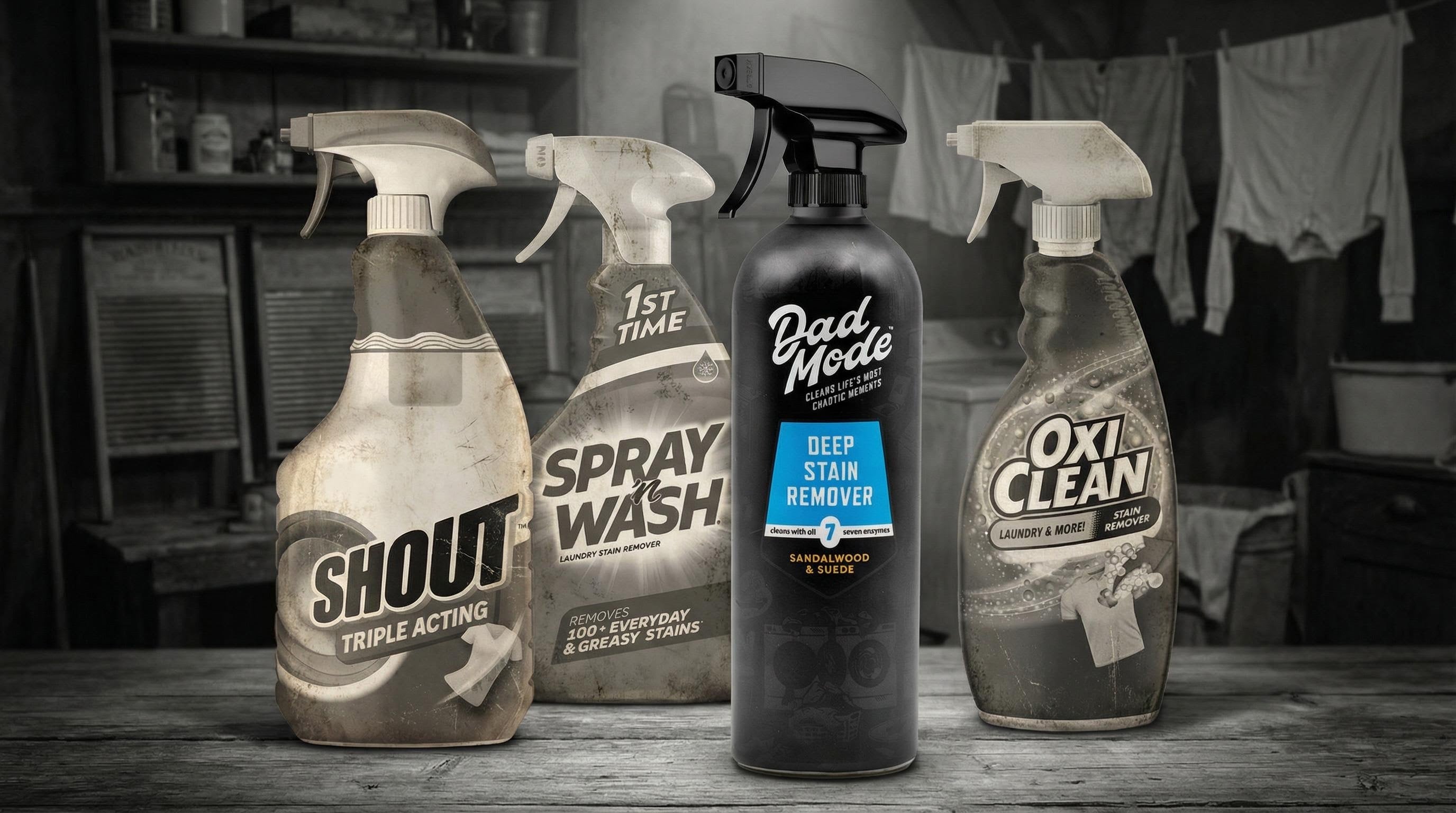
You grab a bottle of Shout off the shelf, spray it on your kid's jersey, and hope for the best.
You've been doing this forever. Your mom did this. Her mom probably did this.
And here's the thing, Shout came out in 1975. Spray 'n Wash launched around 1970. OxiClean showed up in the late '90s. Tide To Go hit shelves in 2005.
The brands running the stain-removal aisle are between 20 and 55 years old.
That's not a knock on them. It's just math. And math has consequences.
Your Clothes Changed. The Stain Removers Didn't.
Go look at the tag on whatever you're wearing right now. There's a solid chance it says polyester somewhere. Polyester now makes up 54–57% of global fiber production. Add in spandex blends, performance fabrics, moisture-wicking everything, and the athleisure revolution.The average American's wardrobe looks nothing like it did when these products were designed.
Here's why that matters: synthetic fabrics are hydrophobic. That means oily, sticky stains don't just sit on top of the fabric, they grip. They bond differently than they do on cotton. They need different chemistry to release.
The kids running around your house in $40 soccer shorts are wearing materials that basically didn't exist when your go-to stain spray was invented.
Your Diet Changed. Same Problem.
Here's one most people haven't thought about: the stains themselves are different now.
Americans get about 57% of their calories from ultra-processed foods. And 60% of grocery purchases contain food additives specifically food gums used as stabilizers and thickeners. We're talking guar gum, xanthan gum, locust bean gum, gellan gum.
These show up in oat milk. Protein bars. Sauces. Frozen meals. Basically anything with a long ingredient list.
Those gums create a specific type of stain; a gum-based residue that behaves completely differently on fabric than a simple food dye or grease stain. And most stain removers aren't designed to address it.
The Chemistry Exists. It's Just Missing From Your Shelf.
There's an enzyme called mannanase. Its job, literally its only job is to break down mannans, which are the core structure of most food gums. It's precise, it's effective, and it's been around long enough that we know it works.
But you'll almost never see it called out on a stain remover label. It's not part of the conversation. That's the gap.
Modern fabrics need enzymes that can penetrate hydrophobic fibers. Modern diets create stains built on food gum chemistry. And the brands dominating the stain-removal aisle were engineered before oat milk was a thing, before athleisure existed, and before the processed food industry quietly rebuilt the American diet around stabilizers and thickeners.
It's not that those old brands are bad. It's that stains evolved and the category didn't keep up.
Someone Had to Notice.
DadMode's Deep Stain Remover was built around a 7-enzyme formula including mannanase because we actually looked at what's in your food, what your clothes are made of, and what it takes to get it all out. All seven enzymes. In one bottle.
Because families don't have time for stains that win.
Share:
Hot vs. Cold Water: The Stain Temperature Rule
Seven Enzymes Walk Into a Laundry Room