

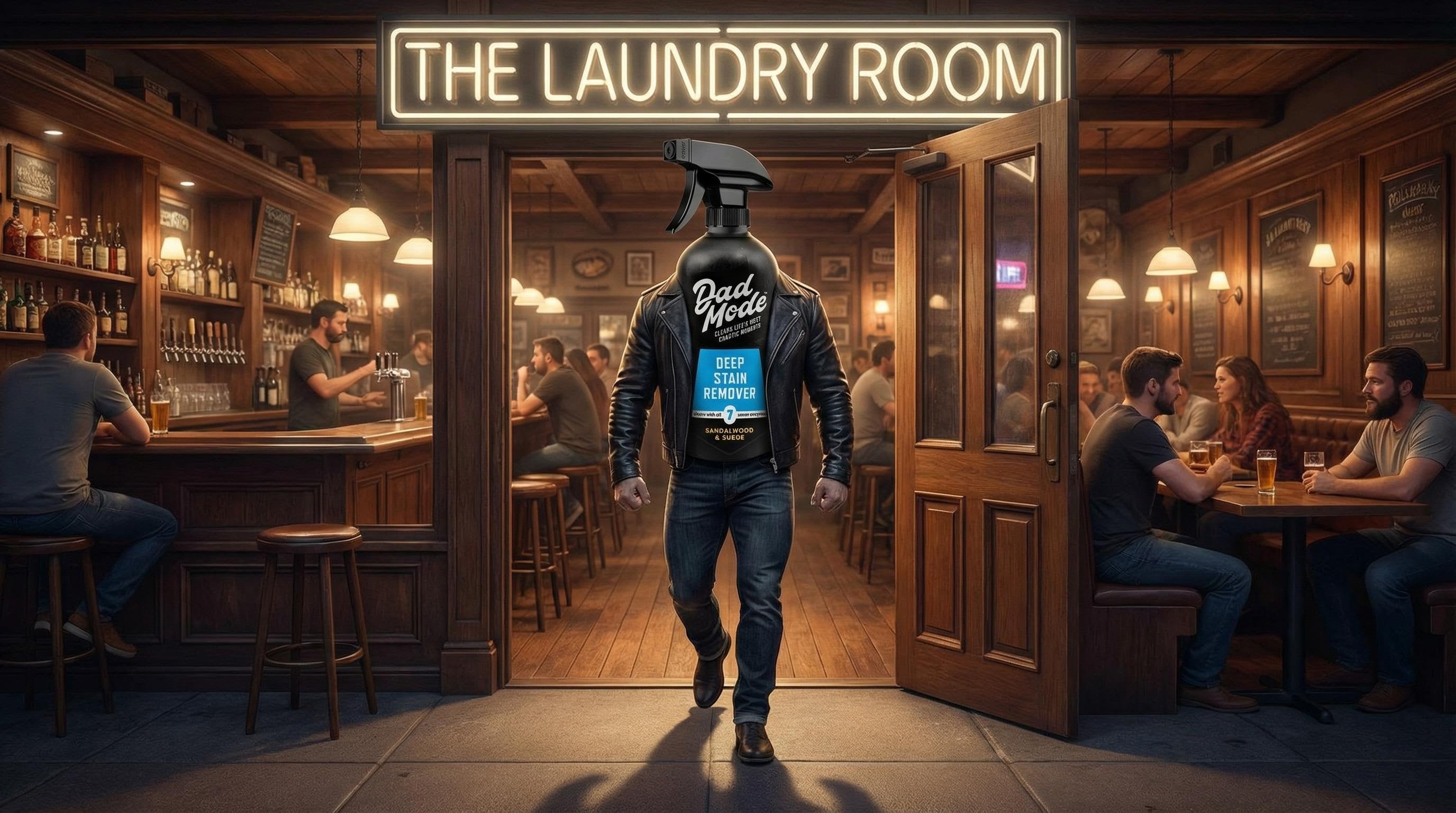
Nobody explains enzymes right. They either go too scientific (bonds and substrates and activation energy) or they go too vague, 'naturally derived cleaning power!' Great. Thanks. What does it do to the marinara on my sleeve.
Let me try it differently.
An enzyme is a biological machine. Its entire job is to break one specific type of molecule into smaller pieces. It doesn't do anything else. It doesn't get distracted. It locks onto its target the way a key locks onto a specific lock (and only that lock) and it breaks it apart. Then it moves on and does it again. And again. Same enzyme, thousands of times.
That specificity is the whole point.
A traditional cleaning product ie: your average spray or detergent, uses surfactants to lift grease and grime from surfaces. Surfactants work by surrounding oil molecules and making them water-soluble. They're useful. But they're broad-spectrum. They don't distinguish between protein-based stains and oil-based stains and carbohydrate-based stains. They just try to make everything slippery and hope the rinse cycle handles it.
Enzymes are different. They're surgical. Each one is built for a specific type of molecule. That's why a bio-enzyme formula with multiple different enzymes outperforms a single-enzyme formula on complex stains, because a kid's lunch is never just one thing. It's oil and protein and starch and sometimes something you genuinely can't identify, all at once.
Here's what each of the seven in our formula actually does.
Protease
Breaks down protein-based stains. Blood, sweat, egg, dairy, baby formula, meat juices. Proteins are long chain molecules that bond to fabric fibers quickly, especially when dried. Protease cleaves those chains into smaller peptides that rinse away. This is probably the most important enzyme for dads because between sports and cooking and kids, protein stains are basically constant.
Lipase
Breaks down fats and oils. Cooking oil, butter, grease, skin sebum, the oil from avocado your kid dragged across the couch cushion. Fats are nonpolar molecules they don't dissolve in water so surfactants do part of the work here, but lipase goes deeper, breaking the fat molecule itself rather than just surrounding it.
Amylase
Breaks down starch. Bread, pasta, rice, oatmeal, potatoes. Starches are complex carbohydrates that dry stiff into fabric and create that crispy residue you might have noticed after washing something that had a thick food stain on it. The stain is 'gone' but the fabric feels wrong. That's amylase's job, break the starch chains so there's nothing left to stiffen.
NucleACE
Breaks down nucleic acids DNA and RNA. This one sounds like a chemistry class answer but it's more relevant than it sounds. Any time there's biological matter, blood, mucus, anything involving cells, nucleic acids are part of what's left behind. NucleACE handles the residue that other enzymes don't catch.
Pectinase
Breaks down pectin, the structural carbohydrate in plant cell walls. Fruit stains, tomato-based sauces, berry juice, these all leave pectin residue that binds to fabric. Without pectinase, you clean the visible color but the structural plant material stays behind and re-attracts dirt. It's why some 'clean' fabric still feels tacky after washing.
Cellulase
This one's a little different. Cellulase breaks down cellulose which is the fiber in cotton and linen. Used carefully, it doesn't damage the fabric. What it does is clean the micro-fibrils that fray off cotton over time, the ones that create pilling, grayness, and that tired look on a favorite shirt. It's also why enzyme-washed fabrics sometimes feel softer after treatment. You're removing the degraded surface layer, not the structure of the fiber.
Mannanase
The one nobody talks about. Mannanase breaks down galactomannan a polysaccharide that's the main thickener in a huge percentage of processed food. Salad dressings, ice cream, baby food pouches, energy bars, anything with guar gum or locust bean gum. These thickeners are everywhere in the modern food supply and they leave a residue on fabric that feels like nothing, looks like nothing, and then attracts every other particle of dirt that comes near it. Mannanase is why a shirt that looked clean a week after washing suddenly looks dingy. The galactomannan was still there.
We were honestly wrong to assume that most parents would know about Mannanase. We'd been thinking about it for months before we realized that unless you're a food scientist or a detergent formulator, there's no reason to have ever heard of it. But if your kids eat modern food, and they do, we all do, it's working against you constantly.
Seven enzymes is not a marketing number. It's the actual number required to cover the categories of mess that show up in a family home. One enzyme can't do it. Three can't do it. You need coverage across proteins, fats, starches, plant matter, biological residue, and the gum-based thickeners hiding in every convenient food your kid touched before hugging you.
That's the formula. That's the whole explanation.
You can now close this and go touch your kid's laundry pile with fresh eyes.
Share:
The Stain Aisle Is Stuck in the Past. Your Laundry Isn't.
Enzymes vs Oxygenated Bleach